
On this page
- Which buildings need commercial gutter work?
- How is a commercial system different?
- Why does Gulf Coast rain matter for big roofs?
- How are large roofs sized?
- What does a commercial gutter job include?
- What causes most commercial gutter failures?
- What should a property manager ask?
- Which building types come up around Spring?
- How is commercial work scheduled?
- What maintenance plan suits a commercial building?
- Related services
Which buildings need commercial gutter work?
Across Spring and the nearby communities, commercial gutter calls come from:
- Retail centers and offices along I-45, FM 1960, SH 249 and the Grand Parkway, where downspouts discharge onto parking lots and walkways.
- Churches and schools, with tall walls, big roof planes and entrances that must stay dry.
- Apartment complexes, where one problem repeats across many buildings.
- Medical offices and business parks with flat roofs, parapets and scuppers.
- Historic buildings in Old Town Spring, where restored houses now serve as shops and need careful work.
How is a commercial system different?
| Element | Residential | Commercial |
|---|---|---|
| Gutter size | 5-inch or 6-inch K-style | 6-inch to 8-inch K-style, box or custom profile |
| Downspouts | 2x3 or 3x4 | 4x5, 6-inch round or larger leaders |
| Flat roofs | Rare | Scuppers and conductor heads through parapets |
| Material | .027 to .032 aluminum | Heavier aluminum, galvanized or Galvalume steel, copper |
| Discharge | Lawn, splash block, buried line | Storm drain connection, site drainage, parking lot |
Why does Gulf Coast rain matter for big roofs?
Big roofs collect a lot of water fast. A 10,000-square-foot roof in a one-inch storm sheds over 6,000 gallons, and the Houston area regularly sees more than that. During Hurricane Harvey, Bush Intercontinental recorded 39.11 inches in August 2017 alone, and Harris County officials estimated 1 trillion gallons of rain fell across the county. Even ordinary summer storms can overwhelm undersized downspouts.
Wind is the other risk. In the May 2024 derecho, winds estimated up to 100 mph broke windows in downtown Houston high-rises, and Hurricane Beryl brought gusts up to 58 mph to Spring two months later. Long gutter runs on exposed commercial eaves need heavy-duty hangers.
How are large roofs sized?
On commercial work, gutters and downspouts are sized by calculation. The inputs are the roof area draining to each gutter, the roof pitch, the design rainfall intensity in inches per hour, the gutter profile, and the number and size of downspouts, which usually limit capacity more than the gutter does. The result is a gutter size, a downspout size and a maximum spacing between downspouts.
What does a commercial gutter job include?
- Site visit. Measure runs, check roof type, parapets and existing drainage.
- Sizing. Calculate gutter and downspout sizes for the roof area.
- Access plan. Lifts, scaffolding or roof access, plus how entrances and parking stay safe.
- Fabrication. Seamless runs formed on site; box gutters and conductor heads made to measure.
- Installation. Heavy-duty hangers or straps, sealed joints, expansion joints on long runs.
- Discharge. Downspouts tied into site drainage or carried clear of walkways.
- Testing and handover. Water test and photos for your records.
What causes most commercial gutter failures?
| Failure | Usual cause |
|---|---|
| Overflow at one end | Too few or undersized downspouts |
| Ponding on flat roofs | Blocked scuppers or drains |
| Leaking box gutters | Failed lining or seams |
| Water at entrances | Downspouts discharging onto walkways |
| Torn-off runs | Light hangers on long, exposed eaves |
| Rust at seams | Debris and water sitting in steel gutters |
What should a property manager ask?
- How did you size the gutters and downspouts for this roof?
- What gauge and material are you quoting, and why?
- How will you keep entrances and parking safe during the work?
- Does the job need a permit, and who pulls it?
- Can I see a certificate of insurance, and may I call the insurer to confirm it?
- What maintenance schedule do you recommend before hurricane season?
Which building types come up around Spring?
| Building | Usual gutter work |
|---|---|
| Strip retail along I-45, SH 249 and FM 1960 | Box gutters, scuppers, large downspouts, storefront drainage |
| Churches and schools | Long runs, tall walls, copper or heavy aluminum, lift access |
| Offices and medical buildings | Commercial K-style or box gutters, matched colors |
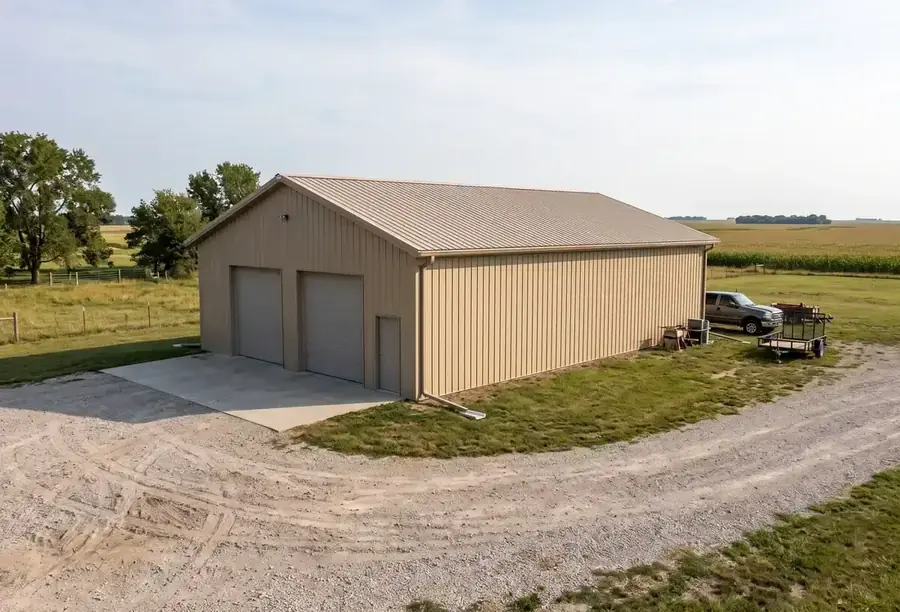
| Warehouses and metal buildings | Eave gutters on metal roofs, oversized downspouts |
| Shops in Old Town Spring | Older buildings, half-round or custom profiles, walkway drainage |
| HOA amenity centers and pools | Downspouts kept off walkways and decks |
How is commercial work scheduled?
Commercial jobs are planned around the building's use. Contractors usually ask for:
- Access times, so lifts and ladders are not blocking entrances during business hours.
- A site contact who can unlock roof hatches and move vehicles.
- Safety plans for work over walkways and parking.
- Photos and roof plans if available, so outlets and downspouts can be sized before the visit.
After a major storm such as Hurricane Beryl, commercial owners compete with homeowners for crews. Booking inspections early in the year, before hurricane season, keeps commercial work off the post-storm backlog.
What maintenance plan suits a commercial building?
| Task | How often |
|---|---|
| Clear gutters, scuppers and conductor heads | Twice a year, more under trees |
| Flush downspouts and underground leaders | Once a year |
| Check box gutter linings and seams | Once a year |
| Inspect after named storms and derechos | After each event |
| Check that downspouts discharge away from walkways | Once a year |
A written log of each visit, with photos, helps with insurance claims and budgeting.
Related services
- Gutter replacement after storm damage.
- Gutter cleaning on a schedule.
- Downspouts sized for large roofs.