
On this page
What storms have hit the Spring area recently?
- Hurricane Beryl, July 8, 2024. Beryl made landfall near Matagorda as a Category 1 hurricane and crossed the Houston area. Gusts reached as high as 58 mph in Spring, with 7.2 inches of rain, and the Spring Fire Department answered 300 calls, many for downed trees and power lines. More than 2.2 million CenterPoint customers in the Houston area lost power.
- The Houston derecho, May 16, 2024. A line of severe storms brought winds estimated at up to 100 mph to parts of the region, the worst damaging wind event in the Houston area in nearly 25 years.
- Hurricane Harvey, August 2017. About 30 inches of rain fell at points along Cypress Creek, and homes near Cypress Creek and Spring Creek flooded.
- Hurricane Ike, 2008. Winds lasted for hours, and about 90 percent of people in the Houston area lost power.
What do storms do to gutters?
| Damage | Usual cause | Usual fix |
|---|---|---|
| Run peeled back from one end | Loose end hanger, wind gusts | Replace section, add hangers |
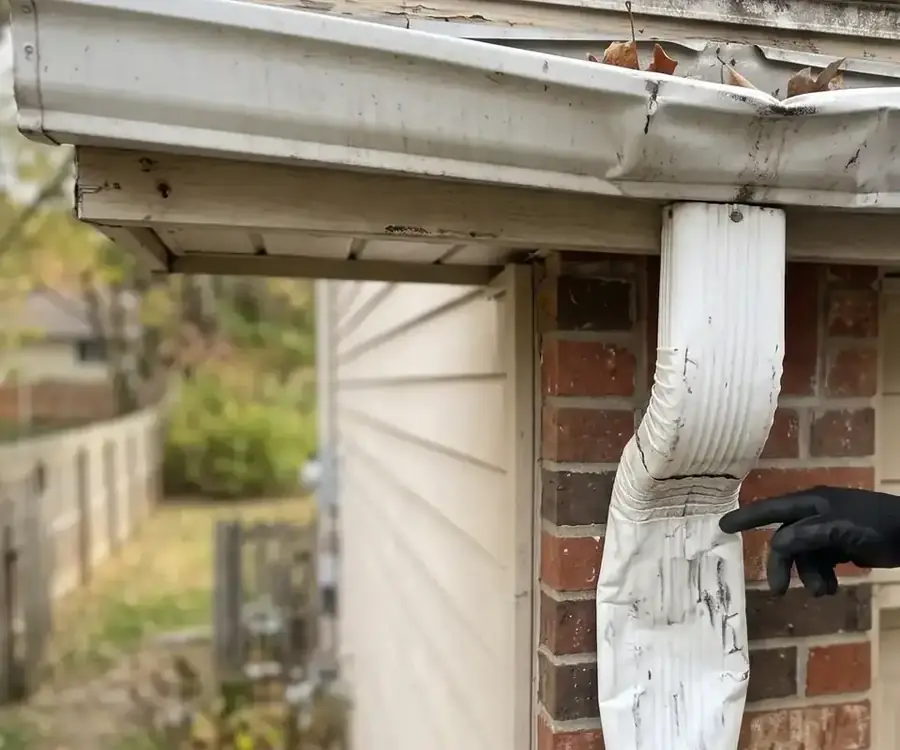
| Crushed or kinked run | Falling limb | Replace section; check roof edge |
| Pulled off with fascia attached | Rotten or soft fascia | Replace fascia, then re-hang |
| Downspout torn off | Missing or loose wall straps | Replace and strap at top, middle and bottom |
| Opened corners | Run flexed in the wind | Re-rivet and reseal, or replace corner |
| Overflow and washouts | Clogged gutters in torrential rain | Clear, upsize, extend downspouts |
What should you do after a storm?
- Stay safe. Keep away from downed power lines and call 911 if one is down or sparking. Keep people clear of hanging gutters and broken limbs.
- Photograph the damage from the ground before anything is moved.
- Check the roof edge and fascia from the ground for lifted shingles or torn wood.
- Report it to your insurer if the damage is significant.
- Call for an inspection and a written quote.
- Choose the contractor carefully. The Texas Department of Insurance suggests hiring locally where possible and getting written bids, warns of common contractor scam signs, and notes it is illegal for a contractor to offer to waive your deductible.
How are gutters hung to survive the next storm?
- Hidden hangers about every two feet, screwed into sound wood, not spikes.
- End caps riveted and sealed, with a hanger close to each end.
- Downspouts strapped to the wall at top, middle and bottom.
- Sound fascia behind every hanger; soft wood replaced first. See fascia and soffit.
- Clean gutters going into the season, so they are not full of heavy wet debris when the wind arrives.
- Branches trimmed back from the roof edge.
Repair or replace?
If a storm damaged one or two runs, replacing those sections is usually enough. If damage runs across several sides, or the old system was already worn, a full replacement may make more sense and gives a matching color and profile. See hurricane season gutter care.
What should the written damage report show?
A good storm inspection gives you something you can send to your insurer:
- Photos of each damaged run, corner and downspout, with the elevation noted.
- Measurements of the footage to be replaced.
- Notes on fascia damage behind the gutters.
- The size, profile, gauge and color needed to match.
- A line-by-line price for repair or replacement.
Can you make temporary repairs?
If a run is hanging loose, keep people away from it. Where it is safe, from the ground, you can tie or prop a loose downspout so it does not swing into windows. Do not climb onto a wet roof or a ladder in wind. Keep any parts that come off; they help match the color and profile for the repair.