
On this page
- Why does clay soil matter?
- How much water is involved?
- How far should water go?
- What are the options?
- What about the slope of the yard?
- What are the warning signs?
- How do you fix it?
- What does watering the foundation mean?
- How do you test your downspout drainage?
- What about neighbors?
- Do French drains replace downspout extensions?
- When should a foundation specialist be called?
- Next steps
Why does clay soil matter?
Much of the Houston area sits on expansive clay. It absorbs water and expands when wet, then shrinks and cracks as it dries, and that movement can leave uneven soil under a home. Texas A&M AgriLife specialists advise that in wet seasons owners should not let water pool at the foundation, and should install gutters and downspouts.
The goal is steady, even moisture around the slab. A downspout that dumps a roof's worth of water into one spot does the opposite: it soaks a small patch in every storm while the rest of the soil stays drier.
How much water is involved?
Bush Intercontinental averages about 52 inches of precipitation a year. Each square foot of roof sheds about 0.62 gallons per inch of rain.
| Roof area feeding one downspout | Water a year |
|---|---|
| 400 sq ft | About 13,000 gallons |
| 800 sq ft | About 26,000 gallons |
| 1,200 sq ft | About 39,000 gallons |
That much water landing beside the slab is a lot of wetting in one place.
How far should water go?
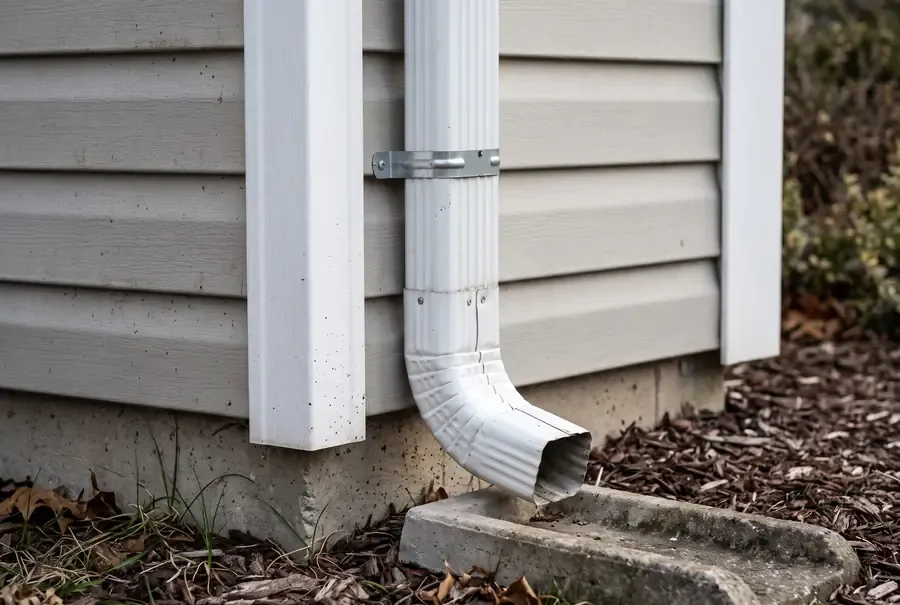
Inspectors who work with expansive soils say downspouts should be long enough to carry water to a swale or drain, away from the foundation. A practical target is several feet at the very least, and 5 to 10 feet where the yard allows, onto ground that slopes away from the house.
What are the options?
| Option | Distance | Cost | Notes |
|---|---|---|---|
| Splash block | 1 to 2 ft | Low | Often too short on clay |
| Downspout extension | 4 to 10 ft | Low | Mowers knock them off |
| Flip-up extension | 4 to 6 ft | Low to moderate | Must be lowered before storms |
| Buried solid line | As far as needed | Moderate to high | Pop-up or curb outlet; flush now and then |
| Rain barrel | Holds the first part of a storm | Low to moderate | Overflow still needs a route away |
What about the slope of the yard?
Soil next to the house should fall away from it for several feet. Flower beds often build up against the slab over time, and mulch and edging can trap water. If water stands near the house after rain, look at the grade as well as the downspouts.
What are the warning signs?
- Puddles or soggy soil beside the slab after rain.
- Soil washed out below the eave or at a downspout.
- Gaps between the soil and the slab in dry spells.
- Downspouts emptying onto beds against the house.
- Water bubbling up from a buried line near the house.
Cracks in walls, sticking doors or sloping floors are matters for a foundation specialist or engineer. Gutter work can fix the water source, but it does not repair a foundation.
How do you fix it?
- Clear gutters and downspouts so water goes where it is meant to.
- Add outlets where valleys or long runs overload a single downspout.
- Extend every downspout several feet onto ground sloping away.
- Consider buried lines to the street or a swale on lots that allow it.
- Re-grade soil so it slopes away from the slab.
What does watering the foundation mean?
In long dry spells, Houston-area clay shrinks and can pull away from the slab. Some foundation specialists suggest watering the soil around the foundation evenly in droughts to limit that shrinking. This is the opposite situation to a downspout soaking one spot in the wet season. The goal in both cases is the same: keep the soil around the house at a steady, even moisture.
How do you test your downspout drainage?
On a dry day, run a hose into the top of each downspout for several minutes and watch:
- Does the water come out freely at the bottom?
- Where does it go? It should flow away from the house, not back toward it.
- Does it pool within a few feet of the slab?
- If there is a buried line, does water come out at the far end?
Mark any problem spots and photograph them for a contractor.
What about neighbors?
Roof water should not be sent onto a neighbor's lot. On closely spaced lots, side-yard downspouts are often the hardest to place. Options include running water along the side yard toward the street in a buried line, or moving the downspout to the front or back corner. HOAs sometimes set rules on where downspouts may discharge.
Do French drains replace downspout extensions?
They do different jobs. A French drain collects groundwater or surface water across an area and carries it away. A downspout extension or buried line carries roof water from a single point. Roof water should never be piped into a French drain unless it is designed for that load, as the volume from a roof can overwhelm it.
When should a foundation specialist be called?
When you see cracks in interior walls or brick, doors and windows that stick or no longer latch, gaps between walls and ceilings, or sloping floors. A gutter contractor can fix where the roof water goes, but structural questions need a foundation specialist or engineer.