
On this page
- What is the short answer?
- What changes the price on a Spring house?
- What does a worked example look like?
- How do you compare quotes?
- What about insurance claims?
- When is the best time to buy?
- What is often left off a cheap quote?
- How long does installation take?
- Does a two-storey house cost much more?
- Next steps
What is the short answer?
Gutters are priced by the linear foot. National price guides put:
| Material | National installed range |
|---|---|
| Seamless aluminum, 5-inch | About $9 to $13 a foot |
| Seamless aluminum, 6-inch | Higher than 5-inch, plus larger downspouts |
| Steel | Similar to or above aluminum |
| Copper | About $25 to $40 a foot |
These are national figures, not Spring prices. Local labor, demand after storms and the details of your house all move the number. The only price that counts is a written quote for your home.
What changes the price on a Spring house?
| Factor | Why it matters |
|---|---|
| Total footage | The biggest single driver; measured along every eave |
| Storeys and roof pitch | Two-storey and steep roofs take more time and safety gear |
| Gutter size | 6-inch costs more per foot than 5-inch |
| Coil thickness | Heavier .032-inch aluminum costs more but dents less |
| Corners and valleys | Each miter takes time; valleys may need extra outlets |
| Downspouts | Number, size (2x3 or 3x4) and length |
| Removing old gutters | Usually a separate line |
| Fascia repair | Rotten boards must be replaced before new gutters go up |
| Guards | A separate cost; micro-mesh is the pricier option |
| Drainage | Extensions, buried lines or pop-up emitters |
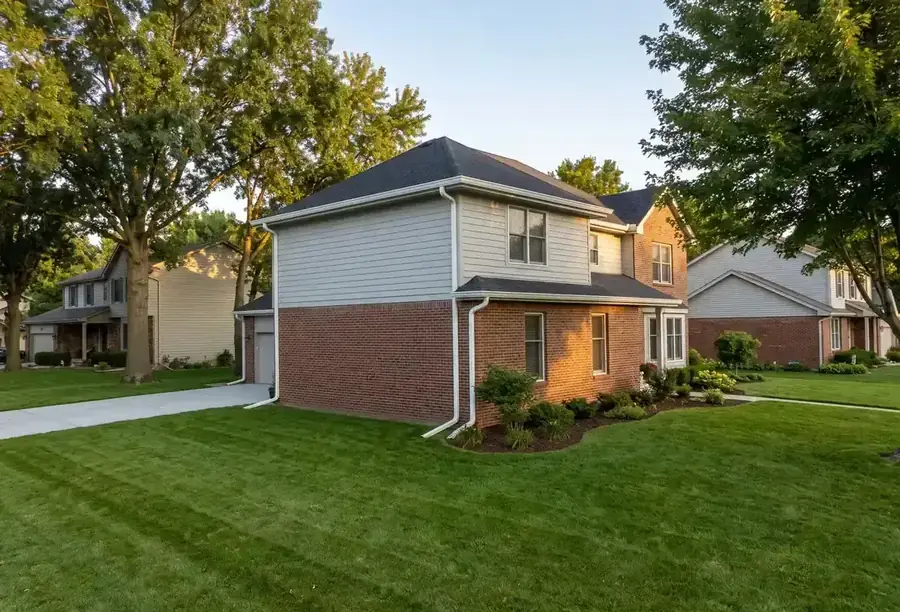
Around Spring, three of these come up again and again. Large two-storey houses in master-planned communities mean more footage and height. Humidity means fascia behind old gutters is often soft, so wood repair is common; air at Bush Intercontinental averages close to 75 percent relative humidity. And pine-heavy lots push many owners toward guards; loblolly pine is the most common native tree in the region.
What does a worked example look like?
Take a two-storey brick house with about 180 feet of eave, eight corners, six downspouts and old sectional gutters to remove.
| Line | How it is worked out |
|---|---|
| Gutters | 180 ft x the per-foot price for the size and gauge chosen |
| Downspouts | Six downspouts x their length (about 20 ft each on two storeys) |
| Removal | Old gutters taken down and hauled away |
| Fascia | Any soft boards replaced, priced per foot or per board |
| Extensions | Discharge carried several feet from the slab |
| Guards (optional) | 180 ft x the guard price per foot |
At the national aluminum range of $9 to $13 a foot, the gutters alone for 180 feet would come to roughly $1,600 to $2,300 before downspouts, removal, repairs and guards. A 6-inch, heavier-gauge system would come in higher. Use your own footage and the quote's prices to see your total.
How do you compare quotes?
Ask each contractor to write down:
- Gutter size and coil thickness.
- Color and finish.
- Hanger type and spacing (hidden hangers about every two feet are standard).
- Number, size and position of downspouts.
- Whether old gutters are removed and hauled away.
- What fascia repairs are included or priced separately.
- Where downspouts will discharge and whether extensions are included.
- Any guards, by brand and type.
If one quote is much lower, look for thinner coil, wider hanger spacing, fewer downspouts or missing removal.
What about insurance claims?
If wind or a falling limb damaged your gutters, the claim may cover repair or replacement. Your policy and adjuster decide. Pay your own deductible: Texas law makes it illegal for a contractor to offer to waive or absorb it. The Texas Department of Insurance advises hiring locally where possible, getting written bids and not paying large sums up front, and lists warning signs of contractor fraud.
When is the best time to buy?
Late fall through early spring, well before the June to November hurricane season. February is the driest month at Bush Intercontinental, at about 3 inches, which makes the work easier, and contractors are usually less stretched than in the weeks after a big storm like Hurricane Beryl.
What is often left off a cheap quote?
| Item | Why it matters |
|---|---|
| Removal and haul-away of old gutters | Can add a noticeable amount if billed later |
| Fascia repair | Soft wood is common here; ask how it will be priced if found |
| Downspout extensions | Without them, water lands beside the slab |
| Extra outlets at valleys | Prevent corner overflow on big roofs |
| Hanger spacing | Wider spacing saves the installer time, not you |
| Clean-up | Old sealant, rivets and screws left in beds |
How long does installation take?
Most single-family houses are done in a day once materials are ready. Large two-storey homes, copper or half-round systems, and jobs with fascia repair take longer. Rain delays are common in summer, so book with some slack in the calendar.
Does a two-storey house cost much more?
Usually somewhat more per foot, and more in total because the downspouts are twice as long. Crews need taller ladders or lifts, and safety setup takes time. On large two-storey homes, 6-inch gutters are often recommended, which adds to the per-foot price but avoids overflow.
Next steps
- Choose a size: 5-inch vs 6-inch.
- Choose a material: aluminum vs steel vs copper.
- Decide on guards: are gutter guards worth it?
- Read the gutter installation page.