
On this page
- What is the quick checklist?
- Why do gutters wear out faster around Spring?
- When is repair the right call?
- When is replacement better value?
- How do you check the fascia?
- How should you compare the options?
- What about storm damage and insurance?
- What does a repair-versus-replace inspection cover?
- How old are your gutters?
- What are the hidden costs of repeated repairs?
- Can you repair now and replace later?
- What if only one side is bad?
- Next steps
What is the quick checklist?
| What you see | Usually means |
|---|---|
| One leaking corner or end cap | Repair |
| One sagging run on sound fascia | Repair |
| One crushed downspout | Repair |
| Storm damage to one or two runs | Repair, replacing those runs |
| Leaks at many joints on sectional gutters | Replace |
| Sagging along several sides | Replace, often with fascia repair |
| Soft or rotten fascia along much of the house | Replace gutters and repair wood |
| Overflow everywhere even when clean | Replace with larger gutters |
| Rust holes in steel gutters | Replace |
| Color you want to change | Replace |
Why do gutters wear out faster around Spring?
Three things shorten gutter life here.
- Moisture. Bush Intercontinental records humidity near 75 percent and rain on about 104 days a year. Sealant breaks down, steel rusts if its coating fails, and fascia rots.
- Weight. Wet pine needles and oak leaves are heavy. Loblolly pine is the most common native tree in the region, so many gutters hold soaked debris for weeks.
- Storms. Hurricane Beryl, the 2024 derecho and summer squalls test every hanger and every joint.
When is repair the right call?
When the trouble is in one place and the rest of the system is sound. Typical repairs:
- Resealing or replacing a leaking corner. See leaking gutters.
- Re-hanging a sagging run on hidden hangers. See sagging gutters.
- Replacing a crushed downspout or adding an extension. See downspout repair.
- Replacing a storm-damaged section. See storm damage.
National guides put most gutter repairs in the low hundreds of dollars.
When is replacement better value?
When problems are spread across the house, repairs only buy time. Replacement makes more sense when:
- The gutters are old sectional pieces leaking at many joints.
- Several runs sag and the fascia behind them is soft.
- The gutters overflow even when clean, so they are too small.
- The color or profile no longer suits the house.
- You have paid for repairs several times in a few years.
New seamless aluminum costs about $9 to $13 a foot installed nationally for 5-inch. See gutter installation cost.
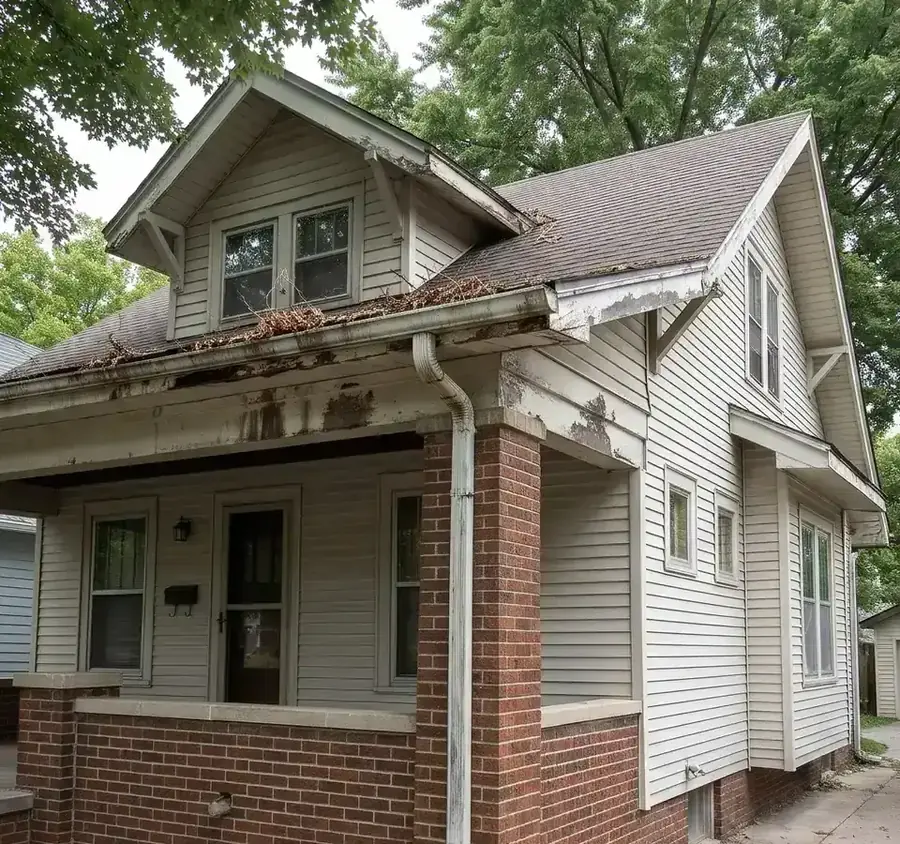
How do you check the fascia?
Press a screwdriver into the fascia behind the gutter at several points. Firm wood is fine. If the tip sinks in, the wood is soft and must be replaced before any gutter is re-hung, whether you repair or replace. See fascia and soffit repair.
How should you compare the options?
Ask for two prices: one for repairing the specific problems, one for full replacement. Weigh the repair cost against the age of the system and how many more repairs it is likely to need. If the repair is more than a third of the replacement price on a system over 15 years old, replacement usually wins.
What about storm damage and insurance?
Wind and limb damage is often covered by homeowners policies. Photograph the damage, report it, and get a written estimate. The Texas Department of Insurance advises getting written bids and hiring locally where possible, and Texas law makes it illegal for a contractor to waive your deductible.
What does a repair-versus-replace inspection cover?
| Check | What the contractor looks for |
|---|---|
| Joints | How many leak, and whether they are sealed or failing |
| Hangers | Type, spacing, and whether they still grip |
| Pitch | Standing water or low spots |
| Size | Signs of overflow even when clean |
| Fascia | Soft spots behind the gutter |
| Downspouts | Size, condition, and where they discharge |
| Material | Rust on steel, splits, dents, faded finish |
How old are your gutters?
If you do not know, a few clues help. Sectional gutters with spikes and ferrules usually point to an older system. Seamless gutters on hidden hangers are more recent. Steel with rust spots is likely older than 15 years. A gutter color that no longer matches the trim suggests it predates the last repaint.
What are the hidden costs of repeated repairs?
Each repair visit has a base charge for travel and setup, so several small repairs over a few years can add up quickly. Meanwhile, the underlying problems, such as small gutters, wide hanger spacing or soft fascia, keep causing new damage. If you have had the same side repaired twice, ask for a replacement price for comparison.
Can you repair now and replace later?
Yes, and sometimes it makes sense. If a roof replacement is planned within a few years, a modest repair now and a full gutter replacement with the roof avoids paying for drip edge and fascia work twice. Tell the contractor about any planned roof work.
What if only one side is bad?
It is common for one elevation, often the back of the house where most of the roof drains or the side under the biggest pine, to wear out first. Replacing just that side with seamless gutters can make sense if the rest is sound and the color still matches. A contractor can tell you whether the other sides are close behind.